

Body Changes, Puberty, and Sexuality
For English subtitles, click Settings, Subtitles, and select English.
Puberty, with its physical and physiological changes, is a major preoccupation for teenagers. Many feel embarrassed or uncomfortable talking about body changes and sexuality with the adults around them. While the school may be a credible source of information and answers to your teen's questions, as a parent you are the main source.
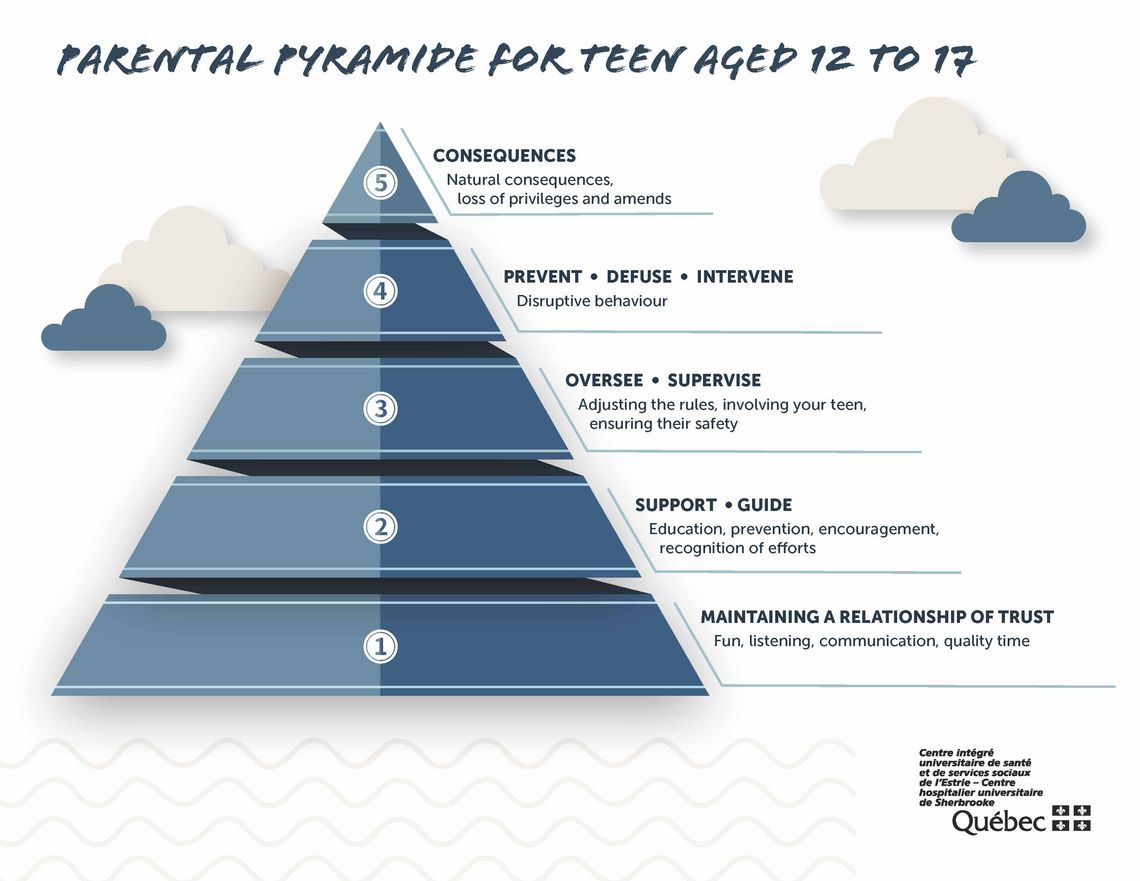
Keeping up a trusting relationship
The bond of trust between you and your teenager is very important when talking about these delicate subjects. Your teen needs to feel that you're open and comfortable talking about it, and, above all, that there's no shame in expressing their concerns. So don't judge and let your teen express themselves at their own pace.
Be proactive. Don't just wait for your teenager to come to you!
Respect their response. Sometimes they won't feel like talking about it...and that's okay. Just simply show them that you're open to listening.
To assist and support
Today's young people are increasingly exposed to images or words that suggest the importance of body image and sexual connotations on television, in advertisements, or on social networks. Guiding your teen through puberty and sex education can be a daunting challenge, but it's essential.
THE IMPORTANCE OF SLEEP
The many physical and physiological changes your teenager is undergoing lead to a drop in energy. The need for sleep is very important, so it's normal for your teen to get up later in the morning. If this need for sleep isn't met, there can be major repercussions, not least in terms of concentration and emotional regulation.
Puberty
These are the main changes to consider in your teenager during puberty.
- Most young people start puberty between the ages of 10 and 14, and the changes can last an average of 3 to 5 years.
- Puberty generally begins earlier in girls than in boys.
- Distinctive characteristics of girls: The greatest growth spurt occurs around age 12 (8 cm per year), reaching adult size around age 15 to 16. The body becomes rounder and longer. The breasts continue to develop until around age 16 (often, one breast develops before the other). Vaginal discharge appears prior to menstruation. The average age of menstruation is 12. Hair growth increases to adult-like levels around age 16 (pubic area, underarms, and legs).
- Distinctive characteristics of boys: Muscle mass develops, and the shoulders broaden. Around the age of 14, the breaking of the voice is complete (deeper voice), and there is a major growth spurt. The testicles and penis develop. Facial, pubic, and underarm hair appear, achieving maturity between the ages of 25 and 35. Starting at the age of 12, erections become more frequent and may be spontaneous. Around the age of 13 to 14, nocturnal ejaculation is common.
What I can do to help
- Discuss puberty before the first signs appear, to better prepare and reassure your teen.
- Highlight body diversity and encourage your teen to respect others for their differences.
- Pay attention and be attentive to what your teenager shares with you (questions, concerns).
Help in buying various items:
- Special daily care items, as needed: skin cleanser and shampoo adapted to their needs, antiperspirant
- Hygienic protection: sanitary napkins, tampons, pantiliners (she can carry an emergency kit in her school bag!)
- Hair removal or shaving method
- Teach your teen to take care of their health. A hygiene routine is important: diet, physical activity, and sleep.
- Avoid comparing their physical appearance with that of other teenagers.
- Offer information on puberty and sexuality (books, websites, magazines).
- If necessary, refer your teen to resources that can answer their needs and questions if doing so goes beyond your knowledge and comfort level (school counselor, Aire Ouverte, youth center, community organization, CLSC, family doctor).
A word about food issues
The relationship with body image in adolescence can cause significant damage in young people, including the onset of an eating disorder. Parents must remain vigilant when they see the following:
- Efforts to take control of their diet and family meals
- Significantly increases their amount of exercise
- Misses family meals
- Major preoccupation with weight
- Rapid weight loss or gain
- Mood changes
These behaviors enable them to meet specific needs and generally conceal great suffering. In this situation, it's normal to see your teen isolate themselves, as they seek to avoid the supervision you're trying to impose in terms of diet. This supervision and your presence are essential to prevent your teenager from developing or worsening an eating disorder.
Here are some resources to help you:
- Family doctor
- School nurse or support staff
- CLSC in your area
- https://anebquebec.com/en
Sexuality
Our role in sex education is more like that of a guide or attentive listener than a subject expert. When we talk about sexuality, we're talking about feelings, getting to know our own bodies, intimate relationships, social norms, respect, protection, and much more.
As a parent, are you comfortable talking to your teen about all these topics? It's an important question to ask yourself. Many parents feel uncomfortable but are looking for ways to get past the discomfort and make it easier to talk. Other parents experience deep discomfort and are not at all at ease. You need to express it and respect yourself in this decision. At this point, you could refer your teen to a friend, resource, or qualified professional.
Here are some resources to help your youngster:
- Tel-jeune
- Aire Ouverte
- School or medical clinic nurse
- Schools now offer a sex-education program from the preschool to secondary levels. You can follow the steps of this program, which is offered according to your child's age and stage of development. Consult the reference site of your local school services center. For more information:
Identity and gender expression...better understanding what my teen is experiencing:
- Gender identity is a personal and internal sense of being male, female, neither both, nor anywhere else on the continuum of gender possibilities. It's not a choice, but rather a deep feeling inside.
- Gender expression refers to how a person presents their gender and expresses it daily through clothing, hairstyle, nouns and pronouns used, etc.
- Sexual orientation refers the sexual and romantic attraction felt towards someone. Again, it's not a choice, but rather a feeling and emotions that are personal to everyone.
Remember: A person can express themselves in their own way, act and choose to develop their skills according to how they feel and not according to the gender assigned to them at birth or their sexual orientation. For example, a boy might be interested in wearing a dress without being homosexual or feeling like a girl.
There's no rush! It's not about making a choice and settling for one gender identity and expression (because yes, there are many). Rather, it's an evolving process that can change over time, but can also remain stable for many people. So, it's normal and human to sometimes ask questions, whether as a teenager or an adult. Explain to your teen that they don't need to feel pressured and that there's no urgency to share anything with you unless they want to and are ready to take that step.
To manage and supervise
A word about pornography
Many teenagers use pornography even though the law prohibits it for anyone under 18. There are certain risks associated with this behavior, as pornography conveys false ideas that can taint your teen's sexual education. Certain actions can be taken to minimize the risks.
Managing Internet accessibility: It's impossible to have total control over our teenagers' use of pornography because access to it is now so easy. We can make their access a little more difficult by using parental controls or establishing rules for screen use.
Open communication on this subject: You can have discussions with them about your values in relation to sexuality or discuss the impact of viewing pornography (prejudices, sex roles, hairless bodies, etc.).
How to prevent, defuse and intervene
It's important to respect your teen's needs as they relate to the development of their sexuality.
- Provide a space in which they can respond to their desire for intimacy.
- Don't go into their bedroom or bathroom without warning: modesty becomes more important to them.
- Clearly explain clearly what is normal and that their feelings are normal. That they can tame their body in rooms where they are alone, with respect for everyone.
- Discuss the risks associated with STBBIs (sexually transmitted blood-borne infections), the possibility of pregnancy and contraception, and that all sexual acts should be consensual.
- Make a box of contraceptives such as condoms available at home and tell your teen that they can and should use them if they have full sexual relations.
- Specify house rules related to friends visiting (e.g., leaving the bedroom door open, leaving before 10 p.m. or age-related rules).
Consequences
Do not tolerate disrespectful comments related to physical and sexual diversity, such as homophobic or transphobic language, or judgments based on appearance, weight, etc. Intervene as you would for any lack of respect.
What the law says about sexual consent
In Canada, the legal age of consent for sexual activity is 16. This applies to all forms of sexual activity, whether kissing, caressing, or intercourse. There are some exceptions for young people who start having sex earlier.
At age 12 or 13: If the younger partner is 12 or 13, there can be no more than two years' difference between the partners. Therefore, it would be illegal for a 15-year-old to have sex with a 12-year-old.
At age 14 or 15: If the younger partner is 14 or 15, the age difference between partners is a maximum of 5 years. In addition, the older partner must not be in a position of authority, trust, or exploitation towards the younger, and the younger one must not be in a position of dependence towards the older partner.
Legal proceedings: Lack of consent to sexual activity, regardless of age, is a criminal offence.
For legal action to be taken, a complaint must first be filed. Often, it's the parents or a significant adult around one or other of the young people who take this step because they feel the relationship is inappropriate.
Activities
Application
Interesting references
- To set up a game plan (French) or a family contract (French).
- Talking to your 6- to 12-year-old about screens
- To learn more about screen management:
Screen-free activities:
+FORT: Stronger than Bullying: https://centreaxel.com/en/projects/stronger-than-bullying/
 Go to capsule 7
 Return to patway's home page